CTN MIEDAR studies. Baseline comparison: Methadone vs. psychosocial participants.
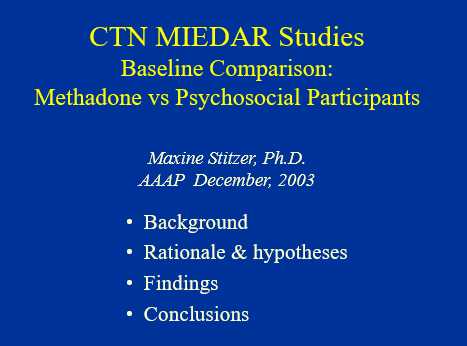 This presentation on the MIEDAR studies (Motivational Incentives for Enhanced Drug Abuse Recovery) compares the potential effectiveness of motivational incentives on participants involved in two different types of drug addiction recovery programs — psychosocial (drug-free) versus methadone. Nancy Petry’s “Fishbowl” method of incentives was used in the two studies. Drug-free participants were allowed to draw tickets from a bowl, 50% of which were “winners” and could be traded for rewards of varying value (everything from toiletries to VCRs). The longer a participant was drug-free, the more tickets they were allowed to draw at a time. The hypothesis was that methadone patients and patients undergoing drug-free treatment might respond differently to the promise of prizes, perhaps due to differences in patient characteristics (such as the way the patients were referred to treatment (e.g. through the criminal justice system) or the fact that methadone patients generally have more severe psychosocial and drug use problems than patients enrolled in drug-free recovery programs).
Related protocols: CTN-0006, CTN-0007