Assessing predictors of treatment retention in a community outpatient substance abuse clinic.
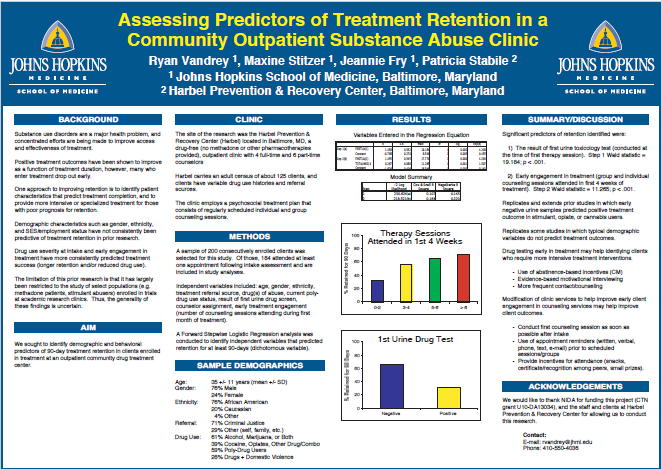 Most who enter treatment for substance use problems have difficulty completing treatment. One approach to improving retention and outcomes is to identify modifiable characteristics of patients who complete treatment so that more intensive or specialized interventions can be given to those with a poor prognosis for retention. In this ancillary investigation, researchers sought to identify predictors of treatment retention at a community drug treatment clinic in Baltimore, Maryland participating in a National Drug Abuse Treatment Clinical Trials Network protocol. A sample of 200 consecutively enrolled clients was selected, of which 184 attended at least one appointment following intake and were included in the study. Data was obtained for independent variables of age, sex, ethnicity, referral source, drug(s) used, poly drug use status, result of first urine drug screen, counselor assignment, and attendance at individual and group counseling sessions during the first 4 weeks of treatment. Analyses showed that the result of the first drug test (positive for any drug or negative for all drugs) and number of individual and group counseling sessions attended during the first 4 weeks were significant predictors of treatment retention. That those with an early negative urine drug screen predicted later treatment success replicates prior findings. This suggests that drug testing early in treatment may be an effective strategy for identifying clients who require more intensive interventions to achieve positive outcomes.
These findings also suggest that modification of clinic services to increase early treatment engagement is a potentially important strategy for improving client outcomes. Early engagement might be improved through diverse strategies such as shortening the time between intake and first counseling appointment, diligent use of appointment reminders, providing small incentives for attendance, or making counseling sessions more engaging for clients.