American Indian/Alaska Native culture and acceptability of a web-based intervention for substance use disorders.
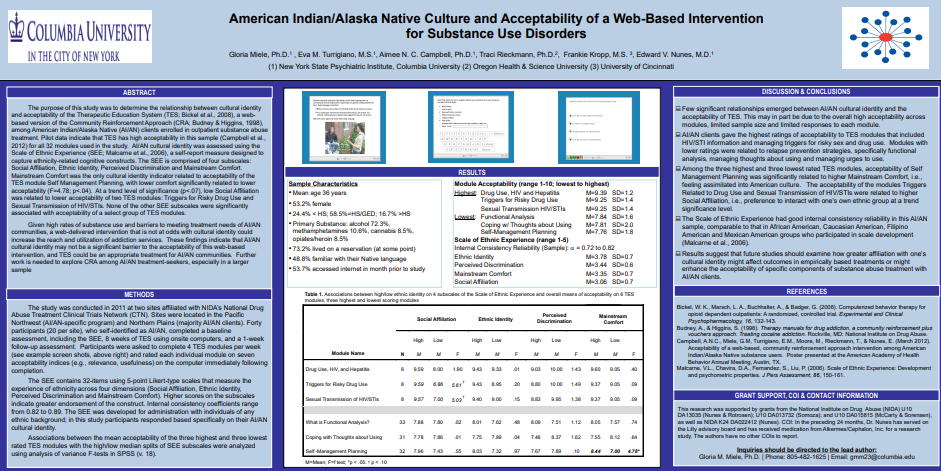 With high rates of substance abuse and barriers to treatment, American Indian/Alaska Native (AI/AN) clients could benefit from culturally sensitive web-based treatments. This study, CTN-0044-A-2, will examine culture and ethnicity in AI/AN clients enrolled in outpatient substance abuse treatment and how culture is related to the acceptability of the Therapeutic Education System (TES), a web-based version of the Community Reinforcement Approach. AI/AN clients from two programs (Northern Plains and Pacific Northwest) completed assessments at baseline and 1 week after the 8-week intervention phase. Participants completed the Scale of Ethnic Experience and questions from the ASI-Native American Version. Participants were also asked to complete 32 skills-based TES modules on acceptability and relevance. Sixty-eight clients were approached to participate in twice weekly TES and assessments; 4 agreed (58.8%). The sample was about half female, mean age 36. Over 80% participated in AI/AN cultural activities, including AI/AN religious ceremonies, dance activities, and church meetings. About half were familiar with their native language, and 73% had lived on a reservation. Analyses will include exploratory chi-square (categorical) and t-tests (continuous) to determine if cultural involvement variables are related to TES acceptability. This study will explore how culture and ethnicity relate to the acceptability of a web-based intervention.