Gender differences of heterosexual anal sex among men and women in substance abuse treatment.
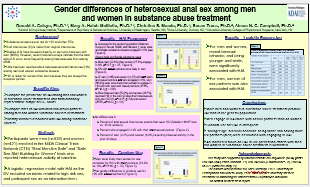 Heterosexual anal intercourse (HAI) is a higher risk behavior for HIV transmission than vaginal intercourse. The NIDA Clinical Trials Network Safe Sex for Men/Women protocols (CTN 0018/0019) provided a unique opportunity to examine this understudied high risk behavior in men and women in substance abuse treatment. Men (n=539) and women (n=422) enrolled in CTN 0018/0019 reporting engaging in heterosexual activities in the 90 days prior to baseline assessment were included. Rates of engaging in HAI were determined for any, main and casual partners. Gender differences were analyzed with contingency table analysis utilizing the 2 statistic. Based on prior research, the following variables have been thought to be related to high risk sexual behavior among substance abusers: age, psychiatric severity, lifetime history of sexual abuse, ethnicity, stimulant use, number of sexual partners. These variables were entered into separate logistic regression analyses for men and women in an effort to identify correlates associated with HAI. More men (32.8%) than women report engaging in HAI. These rates are higher than the prior 90 day rates reported for both men (6.0 to 15.9%) and women (3.5 to 13.0%) age 25-59 in the National Survey of Sexual Health and Behavior. Men (28.6%) and women (23.2%) reported similar rates of engaging in HAI with their main partners. Men were much more likely to report HAI with their casual partners (34.1%) than women (16.7%). In the logistic regression model for men, having more sex partners, being younger, and white were significantly associated with engagement in HAI. For women, stimulant use and younger age were the significant associations.
Conclusions: HAI is a behavior practiced by more men and women in substance abuse treatment than in the general population, and is a logical target of HIV prevention interventions.
Related protocols: CTN-0018, CTN-0019