Gender-based outcomes and acceptability of a web-delivered psychosocial intervention for substance use disorders.
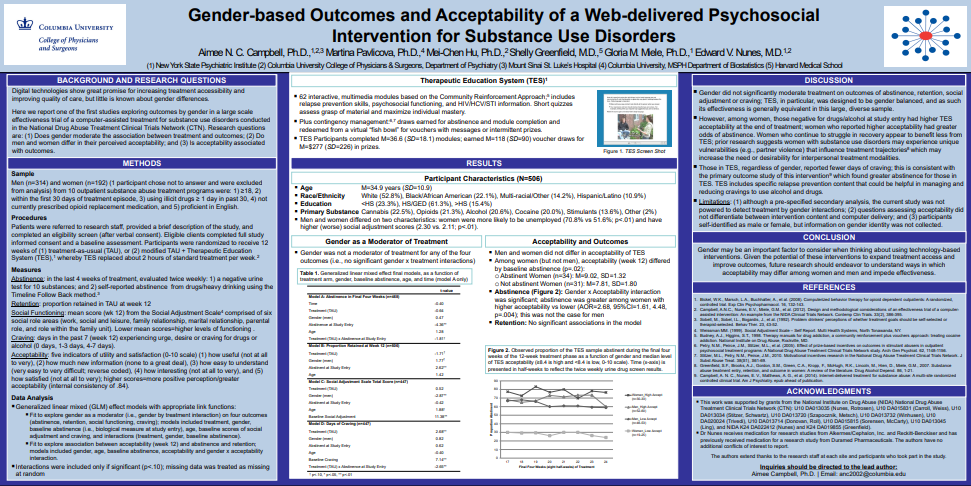 Digital technologies show promise for increasing treatment accessibility and improving quality of care, but little is known about potential gender differences. This secondary analysis uses data from a National Drug Abuse Treatment Clinical Trials Network multi-site effectiveness trial evaluating a computer-assisted behavioral intervention (CTN-0044), to explore gender differences in acceptability and treatment outcomes. Men (n=314) and women (n=192) were randomly assigned to 12 weeks of treatment-as-usual (TAU) or modified TAU and the Therapeutic Education System (TES), whereby TES substituted for 2 hours of TAU per week. TES consists of 62 web-delivered, multimedia modules, covering skills for achieving and maintaining abstinence, plus prize-based incentives contingent on abstinence and treatment adherence. Outcomes were (1) abstinence from drugs and heavy drinking (last 4 weeks of treatment); (2) largest consecutive weeks of abstinence; and (3) retention. Acceptability was the mean score across five indicators (i.e., interesting, useful, novel, easy to understand, satisfaction).
Findings showed that gender did not moderate the treatment effect on any of the three outcomes. Acceptability of TES did not differ by gender, however, a gender-by-acceptability interaction for abstinence and consecutive weeks of abstinence demonstrated that acceptability was significantly associated with abstinence, but only among women.
Conclusions: Gender may be an important fact to consider when thinking about using computer-assisted interventions, such as TES. Given the potential for technology to expand access and improve addiction outcomes, future research should strive to understand how to improve acceptability among women and ways to better integrate these interventions into traditional treatment.
Related protocols: CTN-0044