HIV/AIDS services in substance use disorder (SUD) treatment programs within the clinical trials network.
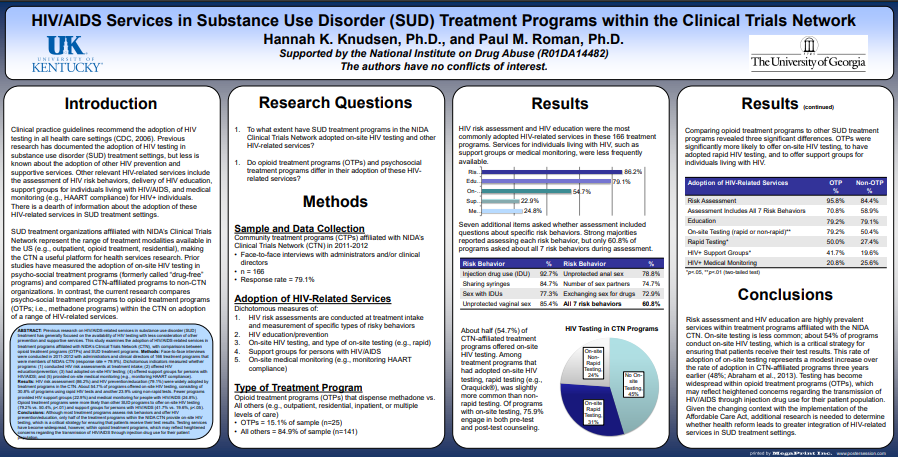 Previous research on HIV/AIDS-related services in substance use disorder (SUD) treatment has generally focused on the availability of HIV testing with less consideration of other prevention and supportive services. This study examines the adoption of HIV/AIDS-related services in treatment programs affiliated with the National Drug Abuse Treatment Clinical Trials Network (CTN), with comparisons between opioid treatment programs (OTPs) and SUD treatment programs. Face-to-face interviews were conducted in 2011-2012 with administrators and clinical directors of 167 treatment programs that were members of the CTN. Dichotomous indicators measured whether programs: (1) conducted HIV risk assessments at treatment intake; (2) offered HIV education/prevention; (3) had adopted on-site HIV testing; (4) offered support groups for people with HIV/AIDS; and (5) provided on-site medical monitoring for people with HIV/AIDS (e.g., monitoring HAART compliance). HIV risk assessment (86.2%) and HIV prevention/education (79.1%) were widely adopted by treatment programs in the CTN. About 54.7% of programs offered on-site HIV testing, consisting of 30.8% of programs using rapid HIV tests and another 23.9% using non-rapid tests. Fewer programs provided HIV support groups (22.9%) and medical monitoring for people with HIV/AIDS (24.8%). Opioid treatment programs were more likely than other SUD programs to offer on-site HIV testing and support groups for people with HIV/AIDS.
Conclusions: Although most treatment programs assess risk behaviors and offer HIV prevention/education, only half of the treatment programs within the CTN provide on-site HIV testing, which is a critical strategy for ensuring that patients receive their test results. Testing services have become widespread, however, within opioid treatment programs, which may reflect heightened concerns regarding the transmission of HIV/AIDS through injection drug use for their patient population.