Motivational enhancement, readiness to change, and treatment success in African American substance users.
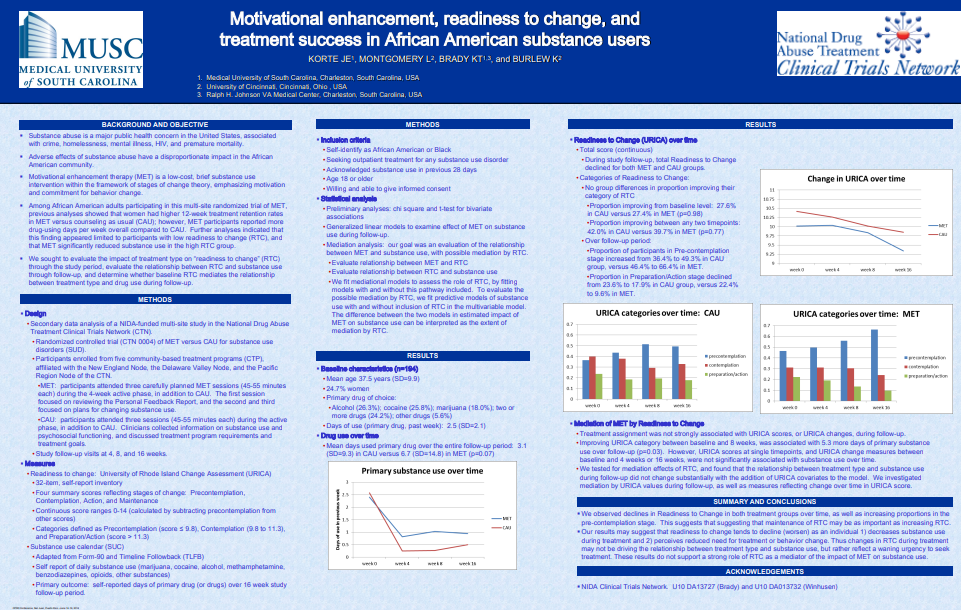 Although a body of literature supports the effectiveness of Motivational Enhancement Therapy (MET) in reducing substance use for the general population, several studies report inconsistent findings, especially among African Americans (AA). In the National Drug Abuse Treatment Clinical Trials Network’s study on MET, CTN-0004, no overall difference was found between MET and counseling as usual. Among AA overall, MET showed significantly more days of primary substance use than CAU; however, this pattern was reversed among those with high baseline readiness to change (RTC). This ancillary investigation of CTN-0004 hypothesized a mediator relationship in AA patients, such that (1) MET would positively influence RTC over time and (2) increased RTC would be correlated with successful treatment outcomes. Secondary analyses of 194 African Americans in CTN-0004 were performed, assessing at baseline, 4, 8, and 16 weeks by the University of Rhode Island Change Assessment (URICA), based on precontemplation, contemplation, preparation, and action. The primary outcome assessed was the total number of days using the primary substance during the 16 week period.
Over the 16 week period, average total RTC score declined slightly, with no significant difference observed between MET and CAU treatment groups. Overall, the MET group reported 6.6 days of primary substance use vs. 3.1 days in the CAU group (p=0.08). An inconsistent role for RTC as a mediator was observed, with RTC change from baseline to 8 weeks significantly associated with substance use in the MET arm, but RTC change to other timepoints not significant. The MET treatment effect was similar in models with and without controlling for baseline RTC and RTC change over time.
Conclusions: These results provide limited evidence for readiness to change as a mediator of Motivational Enhancement Therapy effect in African American patients. It is possible that RTC plays a larger role in maintenance of abstinence at the beginning of treatment.
Related protocols: CTN-0004