Feasibility of conducting genetics research at community treatment programs.
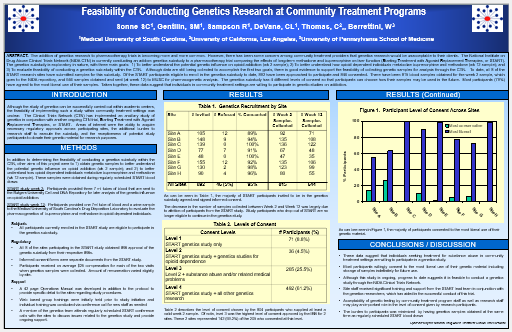 The addition of genetics research to pharmacotherapy trials is becoming more and more common. However, there has been some concern among community treatment providers that genetics research would be unacceptable to their clients. The CTN is currently conducting an add-on genetics substudy to a pharmacotherapy trial comparing the effects of long-term methadone and buprenorphine on liver function (CTN-0027, “Starting Treatment with Agonist Replacement Therapies (START)). The genetics substudy (CTN-0027-A-1) is exploratory in nature, with three main goals: 1) To better understand the potential genetic influence on opioid addiction; 2) To better understand how opioid dependent individuals metabolize buprenorphine and methadone; and 3) To evaluate feasibility of conducting a genetics sub-study within the CTN.
Although data are still being collected to accomplish the first two goals, there is good evidence to support the feasibility of collecting genetic samples for analysis through the CTN. To date, all 8 of the START research sites have submitted samples for this substudy. The genetics substudy has 4 different levels of consent so that participants can choose how their samples may be used in the future. Most participants (79%) have agreed to the most liberal use of their samples. Taken together, these data suggest that individuals in community treatment settings are willing to participate in genetic studies on addiction.
Related protocols: CTN-0027-A-1