Predictors of study retention in drug abuse treatment trials.
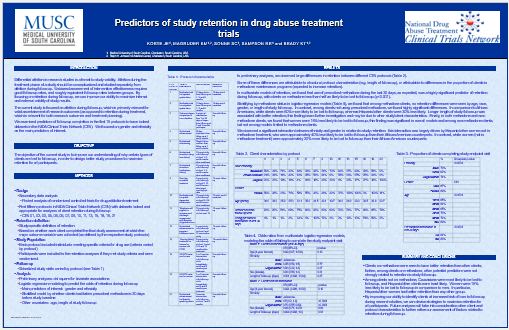 Participant retention is critically important for clinical research studies in the area of addictions. This study, using data from fifteen trials in the National Drug Abuse Treatment Clinical Trials Network, sought to examine predictors of retention in a series of treatment outcome studies. Studies were combined, defining retention through the final follow-up visit, and multivariate logistic regression models were used to assess predictors of study retention, focusing on age, gender, and ethnicity (non-Hispanic White, African American, and Hispanic/Other). Results found no clear pattern, however retention seemed higher in adult pharmacologic trials and lower in sexual risk reduction trials. Younger participants were more likely to drop out and, in comparison to African American participants, non-Hispanic Whites were more likely and Hispanic/Others less likely, to drop out. In terms of gender, no significant difference was found between the sexes, though a significant interaction was discovered between ethnicity and gender in relation to study retention. This interaction was largely driven by Hispanic/Other women (not in methadone treatment), who were approximately 40% less likely to be lost to follow-up than their African American counterparts. The results suggest that strategies focused on improving study retention in younger subjects, and in non-Hispanic females, may be particularly important for increasing participant retention and improving the validity of clinical trial data.
Related protocols: CTN-0001, CTN-0002, CTN-0003, CTN-0004, CTN-0005, CTN-0006, CTN-0007, CTN-0009, CTN-0010, CTN-0011, CTN-0013, CTN-0015, CTN-0018, CTN-0019, CTN-0021