Use of methamphetamine and alcohol in Native American communities.
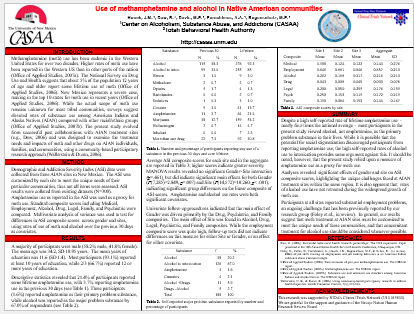 Methamphetamine use has been endemic in the Western United States for over two decades, and higher rates of meth use have been reported in the Western U.S. New Mexico represents a severe case, ranking in the top 10 states for meth use in recent years. While the actual scope of meth use remains unknown for most tribal communities, surveys suggest elevated rates of substance use among American Indians and Alaska Natives (AIAN) compared with other racial/ethnic groups. The present study was designed to examine the treatment needs and impacts of meth and other drugs on AIAN individuals, families, and communities, using a community-based participatory research approach. Data were collected from three AIAN sites in New Mexico. All Addiction Severity Index (ASI) data were collected by chart review (n=212). Amphetamine use as reported in the ASI was used as a proxy for meth use. Descriptive statistics revealed that 24.9% of participants reported some lifetime amphetamine use, with 3.8% reporting amphetamine use in the previous 30 days. One participant reported amphetamine as their primary problem substance, while alcohol was reported as the major problem substance by 95% of respondents. Analyses also revealed different effects of gender across sites, highlighting the challenges at AIAN sites within the same region. Participants at all sites reported significant employment problems. In general, the results suggest that meth treatment at AIAN sites must be customized to meet the unique needs of these communities.
Related protocols: CTN-0033-Ot-2