Criminal justice referral and incentives in outpatient substance abuse treatment.
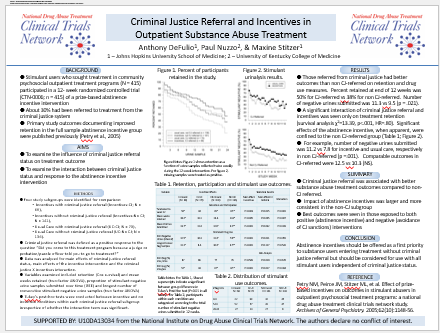 Stimulant users who sought treatment in a psychosocial outpatient treatment program participated in a multi-site 12-week randomized controlled trial (n=415) of a prize-based abstinence incentive intervention. Primary study outcomes were published previously (Petry et al., 2005); the present analysis examined the influence of criminal justice referral on treatment retention and stimulant use. In this study, participants were categorized based on study condition (incentives vs. usual care) and whether they were referred to treatment by the criminal justice system. Analyses assessed the separate and interactive effects of these factors on retention and stimulant use. Participants referred from the criminal justice system were more likely to be retained in treatment and to provide stimulant negative urine samples than those not referred from criminal justice. There was a significant interaction of criminal justice referral and incentives on treatment retention. Among voluntary referrals, those receiving abstinence incentives submitted 11.2 negative urines on average vs. 7.8 submitted by those in usual care. Among criminal justice referrals, mean number of negative urines submitted was 12.5 in those who received abstinence incentives vs. 10.3 in usual care.
Conclusions: Abstinence incentives significantly improved outcomes in voluntary but not in criminal justice referred admissions to outpatient treatment, probably due to higher base rates of retention and abstinence in the CJ referrals. Nevertheless, an additive effect of external motivation sources was seen with best outcomes in those exposed to both positive (abstinence incentives) and negative (CJ monitoring and sanctions) motivators and worst outcomes in those with neither source of external motivation.