Relationship between substance abuse treatment outcome and sexual risk behaviors.
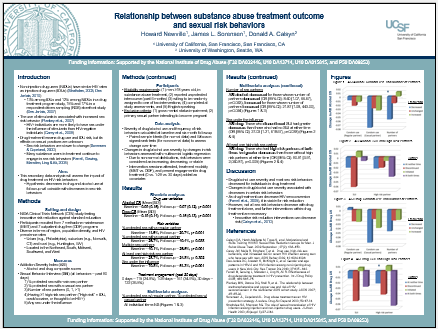 Many substance users enrolled in drug treatment programs continue to engage in high-risk sexual behaviors despite the threat of sexually transmitted infections (STIs). Little is known about the impact of drug abuse treatment on these behaviors. This ancillary investigation of data from CTN-0018 (“Reducing HIV/STD Risk Behaviors: Men”) examined the association of substance abuse treatment with sexual risk behaviors among participants in the multi-site trial. The authors hypothesized that decreased drug/alcohol problem severity would coincide with decreases in sex risk behaviors. Three-hundred and fifty-six men were assessed using the Addiction Severity Index (ASI) and the Sexual Behavior Interview (SBI). Interactions were found between drug/alcohol use severity and condom use with regular partners. Decreased severity of drug problems and decreased severity of alcohol problems were associated with increased condom use with regular sex partners, when controlling for number of treatment sessions attended. There were interactions between decreased number of sex partners and decreased severity of drug and alcohol problems, and between decreased sex under the influence and decreased severity of drug and alcohol problems, but these interactions disappeared when including treatment sessions attended. Condom use with casual sex partners and having at least one high risk partner did not interact with decreased drug/alcohol use severity.
Conclusions: Some sexual risk behaviors decreased in those whose drug/alcohol use severity also decreased independent of specialized treatment-based intervention sessions. Enrollment in drug treatment may serve as an effective method for reducing HIV risk behaviors among drug users. Further research is needed to pinpoint the effect of drug treatment independent of other factors.
Related protocols: CTN-0018