This page is focused on publicly-accessible events related to the CTN and/or hosted by NIDA, Nodes, CTN study teams, or CTN SIGs and committees.We also list some major national/international conferences of particular interest to the Network.
NIDA CTN – Future of AI in Medicine: Medical Imaging as an Example
November 20, 2024 @ 12:00 pm - 1:30 pm EST
Join the NIDA CCTN on November 20 (12pm ET) for a webinar on the future of AI in medicine!
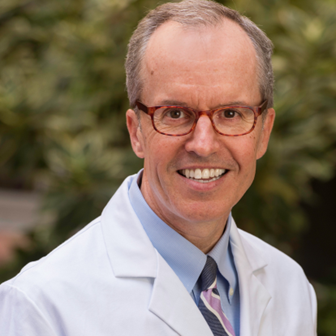
Presenter:Dr. Curt Langlotz
Professor of Radiology, Medicine, and Biomedical Data Science
Senior Associate Vice Provost for Research
Director, Center for Artificial Intelligence in Medicine & Imaging
Senior Fellow, Institute for Human-Centered Artificial Intelligence
Artificial intelligence (AI) is an incredibly powerful tool for building systems that support the work of clinicians and researchers. Over the last decade, machine learning methods have revolutionized the analysis of medical data, leading to high interest and explosive growth in the use of AI and machine learning methods. These promising techniques create systems that perform some clinical tasks at the level of expert physicians. Deep learning methods in imaging are now being developed for image reconstruction, imaging quality assurance, imaging triage, computer-aided detection, computer-aided classification, and radiology report drafting. The systems have the potential to provide real-time assistance to radiologists and other imaging professionals, thereby reducing diagnostic errors, improving patient outcomes, and reducing costs. We will review the origins of AI and its applications to medicine, and medical imaging, define key terms, and show examples of real-world applications that suggest how AI may change the practice of medicine. We will also review key shortcomings and challenges that may limit the application of these new methods.
Learning objectives
Understand the origins of artificial intelligence and machine learning and their application to medical imaging
Predict how machine learning methods will change the practice of medicine using current examples from medical imaging
Describe how large language models will affect health care
Assess the shortcomings of artificial intelligence that may limit its applicability
About the presenter
Curtis P. Langlotz, MD, PhD : Dr. Langlotz is Professor of Radiology, Medicine, and Biomedical Data Science, and Senior Associate Vice Provost for Research at Stanford University. His NIH-funded laboratory develops machine learning methods to improve the accuracy and efficiency of medical image interpretation. He also serves as Senior Fellow at Stanford’s Institute for Human-Centered Artificial Intelligence and Director of the Center for Artificial Intelligence in Medicine and Imaging (AIMI Center), which supports over 200 faculty at Stanford who pursue interdisciplinary machine learning research to improve clinical care.
Register here!