Is the association of therapeutic alliance with days of use always negative?
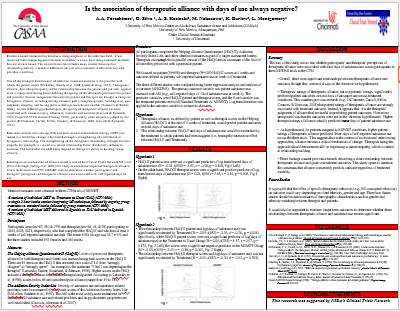 Evidence-based treatment has become a strong emphasis in the addiction field. From results of trials comparing one treatment to another, we now have many treatment methods that are science based. The science base also includes many studies showing that relationship matters; it makes a difference not just what treatment is delivered, but who provides it and how. One of the strongest determinants of addiction treatment outcome is the provider with whom the patient works. Therapeutic alliance, describing the quality of the relationship between the patient and provider, appears to be a strong contributing factor defining the quality of the relationship between the patient and provider.
Building on an examination of alliance tested in one of the National Drug Abuse Treatment Clinical Trials Network studies on motivational interviewing (MI) (CTN-0004, “MET (Motivational Enhancement Treatment) to Improve Treatment Engagement and Outcome in Subjects Seeking Treatment for Substance Abuse”), this study examined the impact of therapeutic alliance across three multi-site CTN MI/MET trials (CTN-0004, CTN-0005, and CTN-0021) to determine whether participants’ and therapists’ perceptions of therapeutic alliance were associated with self-reported days of use.
Related protocols: CTN-0004, CTN-0005, CTN-0021