Fidelity monitoring model for an MI based brief-intervention conducted in the emergency department.
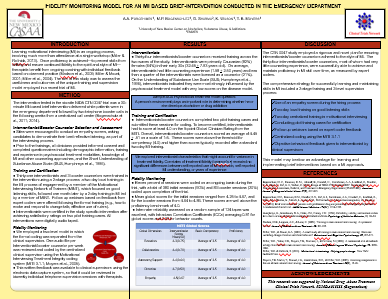 Learning motivational interviewing (MI) is an ongoing process, involving much more than attendance at a single workshop. Once proficiency is achieved, therapists benefit from ongoing coaching with individual feedback based on observed practice to ensure continued fidelity. The aim of this study was to assess outcomes of the unique training and supervision model employed in a recent trial of MI. The intervention tested in the six-site National Drug Abuse Treatment Clinical Trials Network protocol CTN-0047 trial was a 30-minute MI-based brief intervention delivered in the emergency department followed by two telephone booster calls delivered from a centralized call center. Thirty-one counselors and 3 booster counselors were trained in the intervention using a 2-stage process: local training in the MI process of engagement followed one month later by a 2-day training in MI. We employed a two-level model in which the formal coding was separated from the clinical supervision. One audio file per interventionist per week was coded using the MITI 3.1.1 coding system. This written feedback was available to clinical supervisors, who reviewed coding results during telephone supervision sessions.
Eleven percent of sessions were coded on an ongoing basis during the trial, with a total of 380 initial sessions (90%) and 83 booster sessions (20%) coded upon completion of the trial. Mean global scores for initial sessions ranged from 4.25 to 4.67, and for the booster sessions from 4.64 to 4.86, well above the proficiency benchmark of 4.0. Inter-rater reliability assessed on a random sample of 124 tapes was excellent, with ICCs averaging 0.81 for global scores and 0.93 for behavior counts. On a therapist level, MITI scores tended to improve over time, demonstrating the strategies employed helped with adherence and continued learning in MI.
Conclusions: A comprehensive strategy for successfully learning and maintaining skills in MI emerged from the CTN-0047 study, which employed a rigorous and novel plan for ensuring therapists adhered to the style of MI.
Related protocols: CTN-0047