Construct and predictive validity of composite measures of motivation to change derived from the URICA.
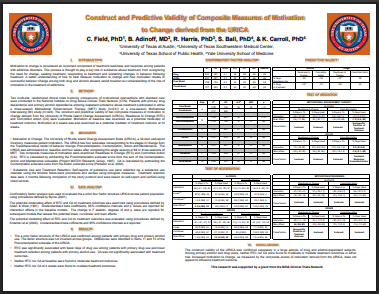 Motivation to change is considered an important component of treatment readiness and response among patients with addictive disorders. A better understanding of how to best measure motivation to change and how motivation relates to successful behavior change among both drug and alcohol abusers would broaden our understanding of the role of motivation in treatment of addictions. In this study, two multi-site, randomized clinical trials comparing brief motivational interventions with standard care were conducted in the National Drug Abuse Treatment Clinical Trials Network (protocols CTN-0004 and -0005). The construct and predictive validity of two composite measures of motivation to change derived from the University of Rhode Island Change Assessment (URICA): Readiness to Change (RTC) and Committed Action (CA) were evaluated. The a priori factor structure of the URICA was confirmed among patients with primary drug and primary alcohol use. Additionally, the RTC was significantly associated with fewer days of drug use among patients with primary drug use and lower treatment retention among patients with primary alcohol use. CA was not significantly associated with treatment outcomes.
Neither RTC nor CA were found to moderate or mediate treatment outcomes at baseline or 4 weeks. In conclusion, increased motivation to change, as measured by the composite scores of motivation derived from the URICA, does not appear to influence treatment outcome.
Related protocols: CTN-0004, CTN-0005