Ethnic variations in the structural family relations of substance-using adolescents.
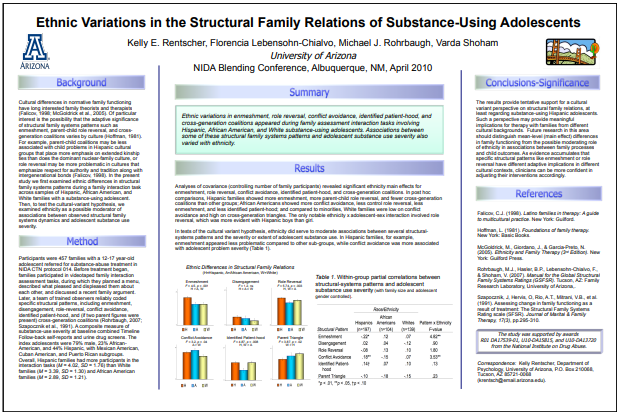
Cultural differences in normative family functioning have long interested family theorists and therapists. Of particular interest is the possibility that the adaptive significance of structural family systems patterns such as enmeshment, parent-child role reversal, and cross-generation coalitions varies by culture. For example, parent-child coalitions may be less associated with child problems in Hispanic cultural groups that place more emphasis on extended kinship ties than does the dominant nuclear-family culture, or role reversal may be more problematic in cultures that emphasize respect for authority and tradition along with intergenerational bonds. The present study examined data from CTN-0014 (“Brief Strategic Family Therapy for Adolescent Drug Abusers”) to look at ethnic differences in structural family systems patterns during a family interaction task across samples of Hispanic, African American, and White families with a substance-using adolescent. Then, the cultural-variant hypothesis was testing through an examination of ethnicity as a possible moderator of associations between observed structural family systems dynamics and adolescent substance use severity. Results provide tentative support for a cultural variant perspective on structural family relations, at least regarding substance-using Hispanic adolescents. Such a perspective may provide meaningful implications for therapy with families from different cultural backgrounds.
Related protocols: CTN-0014-A-1