Staff reports of program structure in relation to client retention, alliance, and drug alcohol outcomes.
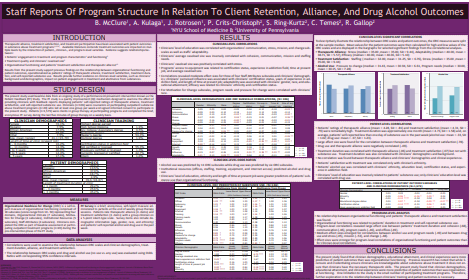 Therapeutic alliance, treatment satisfaction, and treatment participation have been associated with patient outcomes in substance abuse treatment programs. Available literature contends treatment outcomes are impacted on multiple levels by the interaction of patient-, clinician-, and program-level variables. Evidence suggests relationships between: patients’ engagement in treatment and program characteristics and functioning; treatment quality and clinicians’ caseload size; and organizational functioning and patients’ treatment satisfaction and therapeutic alliance.
Results from this study, which used baseline data from the Patient Feedback study (protocol CTN-0016), support previous findings on the relationship between organizational functioning and patient outcomes, operationalized as patients’ ratings of therapeutic alliance, treatment satisfaction, treatment duration, and self-reported substance use. Results provide further evidence on clinician-level variables, such as clinicians’ background and demographics, impact on patient engagement in treatment and abstinence from substances.
Related protocols: CTN-0016